Comparisons
I Tested Another Hunt Cheat for Two Weeks Before Switching
I kept seeing another Hunt: Showdown cheat mentioned in gaming communities, so I wanted to understand why people were talking about it.
The advertisements were familiar. ESP. Aim assistance. Extra player information. Regular updates. The usual promises that make third-party software sound much more reliable than it actually is.
Instead of focusing on a feature-by-feature setup guide, the more interesting question is what happens when you look at the whole experience: reliability, updates, security, account risk, and whether the advertised advantages are actually worth the trade-off.
First impressions
The first thing that stood out was how polished the marketing looked.
Modern cheat websites often look like legitimate gaming-software stores. They have feature lists, screenshots, pricing pages, customer testimonials, and update announcements.
That can create the impression that you are buying a normal software product.
But appearances do not change the fundamental issue.
This is still unauthorized third-party software interacting with a multiplayer game.
The feature list looked impressive
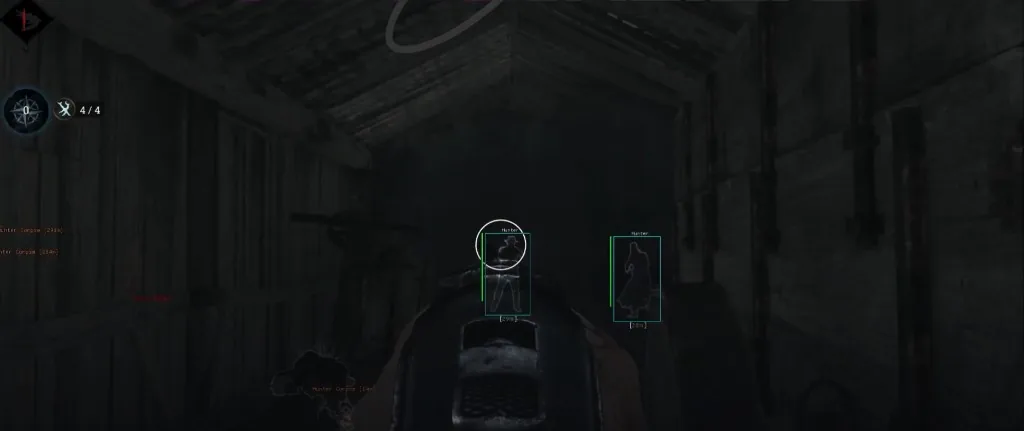
Like most products in this category, the advertised feature list focused heavily on information.
ESP was presented as one of the major selling points.
Aim-related features were also promoted heavily.
There were additional options described around player information and visual awareness.
On paper, it sounded comprehensive.
But feature lists are not the same thing as reliability.
A product can have twenty advertised features and still be frustrating if updates arrive slowly or the software frequently breaks.
Updates became the interesting part
Hunt changes over time.
Whenever the game receives updates, third-party software can potentially be affected.
That makes cheat subscriptions different from ordinary software subscriptions.
With normal applications, an update usually means new functionality or bug fixes.
With unauthorized game software, an update can mean the program suddenly stops working.
That creates a dependency that is easy to overlook when looking at the price.
The security question stayed in the back of my mind
This was probably the biggest reason I became less interested.
Any time an unknown third-party program is running on a computer, there is a security consideration.
It does not matter whether the program is marketed as a gaming tool.
You still need to consider what you are installing and what permissions it receives.
That risk is separate from whether the cheat actually works.
A product could technically provide the advertised functionality and still not be worth trusting with your computer.
The account-risk problem
Then there is the obvious issue: the game account.
If you have invested hundreds of hours into Hunt, losing access is not a minor inconvenience.
There is no configuration that can guarantee an account will never be penalized.
The phrase "undetected" should therefore be viewed carefully.
Detection technology changes.
Games update.
Third-party software changes.
Nobody can honestly turn future uncertainty into a permanent guarantee.
What actually makes a Hunt player better?
This experiment also made something else obvious.
A lot of the information people want from cheats can be learned legitimately.
Where are players likely to rotate?
Which compounds have dangerous approaches?
What does a particular gunshot tell you?
How long has another team probably been in the area?
Where would an enemy logically position themselves?
Those questions become easier with experience.
The difference between information and game sense
An overlay can show information.
Game sense teaches you what that information means.
That distinction matters.
Knowing an enemy is nearby is useful.
Understanding why they are likely to be nearby is much more powerful.
Knowing that a shot came from a particular direction is useful.
Understanding where that team is likely to move next is a skill.
The second type of knowledge stays useful regardless of the software or game update.
Why I would be cautious
After looking at the whole picture, the biggest problem with third-party Hunt cheats is not necessarily the advertised feature list.
It is the collection of risks surrounding them.
Account penalties.
Security concerns.
Broken updates.
Unreliable sellers.
Subscription costs.
And the possibility that the software simply stops being useful.
That is a lot of uncertainty for something that is supposed to make a game easier.
Final verdict
The biggest lesson from looking at another Hunt cheat was that the feature list is only a small part of the decision.
Before trusting any third-party gaming software, you need to consider the security of your computer, the value of your game account, the reliability of updates, and whether the promised advantage is worth those risks.
For me, the more interesting long-term solution remains learning the game itself.
Hunt has enough depth that improving audio awareness, positioning, map knowledge, and decision-making can provide a much more satisfying advantage.
A cheat can promise information instantly.
Game sense takes longer.
But game sense does not disappear when the next update arrives.