ESP
Hunt ESP and Wallhack Explained Clearly
ESP and wallhack are two of the most commonly discussed terms whenever players talk about Hunt: Showdown cheats.
They are often used interchangeably, but they do not always describe exactly the same thing.
Understanding the terminology is useful because cheat advertisements frequently use several names for similar features. A player searching for "Hunt wallhack" may actually be looking at a product primarily marketed as ESP.
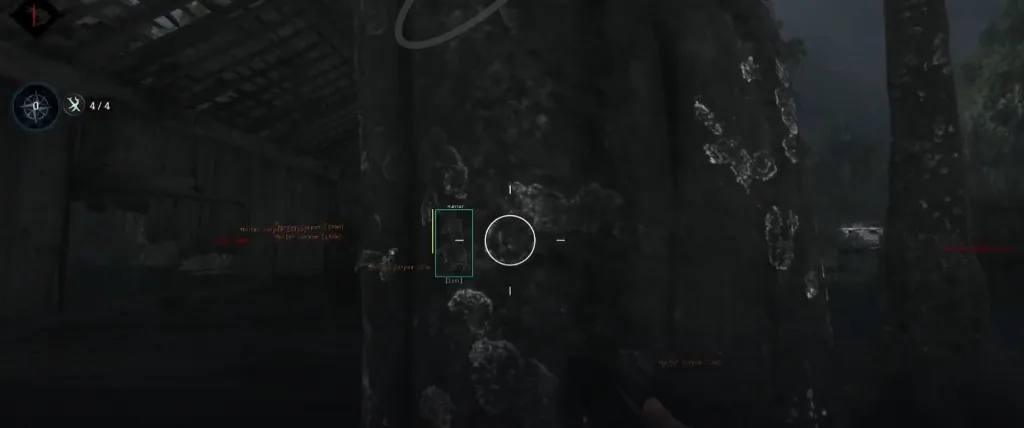
What does ESP mean?
ESP usually stands for "Extra Sensory Perception."
In gaming discussions, the term generally refers to an overlay that provides information the normal game interface does not directly display.
Depending on the software, advertisements may describe information such as player locations, distances, names, health information, or other game entities.
The important part is the additional information.
Instead of relying entirely on what the character can normally see or hear, the player receives an external visual representation of information from the game.
What is a wallhack?
A wallhack generally refers to seeing information about players or objects through terrain, buildings, or other geometry.
In a normal Hunt match, a wooden wall means you cannot simply look through it.
A wallhack-style feature changes how that information is presented.
This can make defensive positions, compounds, buildings, and ambushes much easier to understand.
That is also why wallhacks can fundamentally change the balance of a multiplayer match.
ESP can contain more information than a wallhack
A basic wallhack might simply reveal a player's position.
ESP is often a broader category.
A cheat marketed as ESP might include boxes, outlines, distance indicators, names, skeleton information, or other overlays.
This is why the terms can become confusing.
One seller might call a feature "wallhack," while another describes almost the same concept as "player ESP."
The terminology is less important than what information the software actually provides.
Why ESP is powerful in Hunt
Hunt is built around uncertainty.
You hear something but may not know exactly where it came from.
You see movement but may not know whether it was an enemy.
You hear a door open but cannot necessarily determine who opened it.
That uncertainty is part of the game's tension.
An external information overlay can reduce that uncertainty dramatically.
Knowing where another hunter is positioned can change whether you push, rotate, hold, or retreat.
The problem with cheat advertisements
One thing worth remembering is that feature lists are marketing.
A website may advertise "perfect ESP," "undetected wallhack," or "advanced player tracking."
None of those phrases should automatically be interpreted as guarantees.
Software can break.
Features can become incompatible after updates.
Accounts can receive penalties.
And third-party downloads can introduce security risks.
Why legitimate players sometimes misunderstand ESP
Good Hunt players can occasionally appear to have information they should not have.
That does not automatically mean cheating.
Experienced players understand common rotations.
They recognize weapon sounds.
They remember where teammates were last seen.
They can infer positions from AI behavior and environmental changes.
A strong player can therefore make surprisingly accurate predictions without using any external software.
Learning the same information legitimately
If ESP sounds appealing because you struggle with awareness, focus on building your own information system.
Listen to gunshots.
Remember where enemies were last spotted.
Track doors and windows.
Pay attention to AI.
Think about likely rotation routes.
Use the map intelligently.
Over time, you begin predicting what is happening rather than simply reacting to it.
That is one of the most satisfying parts of Hunt.
Final thoughts
ESP and wallhack are not simply cosmetic modifications.
They provide information that can fundamentally change how a multiplayer match is played.
Understanding the terminology is useful when researching the subject, but players should also understand the risks associated with unauthorized software.
If your goal is better awareness, Hunt already provides a huge amount of information through sound, AI behavior, map design, and environmental clues.
Learning to read those signals is slower than receiving an overlay.
It is also a skill you can keep.