Cheats Guide
Hunt Cheats in 2026: What They Are and How to Use Them Carefully
Hunt: Showdown has always been a game where information matters almost as much as aim. A distant gunshot, an opened door, a missing AI grunt, or a team moving through a compound can completely change the way a match develops. That is also why third-party cheats continue to attract attention from some players.
The term "Hunt cheats" covers a wide range of unauthorized software. Some products advertise features such as ESP, wallhacks, aim assistance, player information, loot overlays, or other modifications to the normal game experience. The problem is that the marketing around these products can make them look much safer and simpler than they actually are.
Before considering anything described as a Hunt: Showdown cheat, it is worth understanding what these programs actually represent, what risks are involved, and why "undetected" should never automatically be treated as a guarantee.
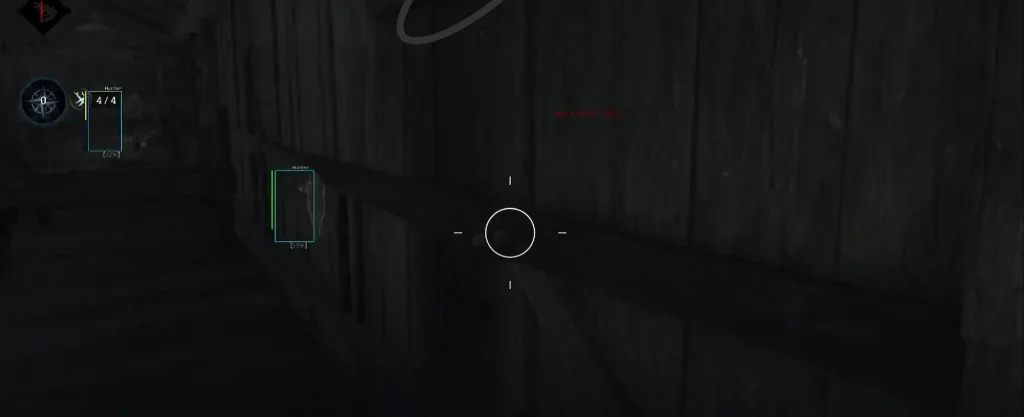
What are Hunt: Showdown cheats?
A cheat is generally third-party software designed to provide information or functionality that the normal game does not provide.
The most commonly advertised categories include ESP, wallhacks, aim assistance, radar-style information, and various visual overlays. Some products combine several features into one interface, while others focus on a single function.
ESP, for example, is usually marketed around additional information about players or objects. A wallhack is generally described as allowing players to see information through game geometry. Aim assistance is designed to influence targeting.
These features can dramatically change the information available during a match.
That is exactly why they can also result in account penalties and other problems.
Why "undetected" does not mean risk-free
One of the biggest mistakes players make when looking at cheat advertisements is treating the word "undetected" as a permanent status.
Anti-cheat systems change. Game updates change. Cheat software changes. Detection methods can also change.
Something that has not apparently been detected today can potentially become detectable after a future update or investigation.
There is also a difference between a seller claiming that a product is undetected and having independent evidence that an account is genuinely safe. Those two things should never be treated as equivalent.
The security problem is bigger than the game account
There is another issue that receives much less attention: the software itself.
Players searching for third-party game modifications may encounter files hosted by unknown websites, unofficial launchers, suspicious installers, or programs requesting unusually broad permissions.
That creates a completely separate security question.
Even if the software did exactly what the advertisement promised, downloading unknown executable files can expose a computer to malware, credential theft, unwanted software, or other security problems.
A good rule is simple: never assume that a gaming-related download is trustworthy simply because it has a professional-looking website.
What about temporary or private cheats?
Some advertisements attempt to create a sense of exclusivity by describing a product as private, temporary, limited, or specially protected.
That language can make a product sound safer, but it does not remove the underlying risks.
A private product is still unauthorized software. A temporary product is still capable of causing account problems. A product with a small user base is not automatically safe.
The important question is not how impressive the marketing sounds. It is whether you are comfortable accepting the consequences if the software is detected or turns out to be malicious.
Hunt: Showdown already rewards information heavily
There is also an interesting reason cheating can feel tempting in Hunt.
The game naturally places enormous value on information.
Listening carefully can reveal enemy movement. AI behavior can indicate that another hunter passed through an area. Doors and windows tell stories. Compound layouts create predictable routes. Gunshots provide direction and approximate distance.
Learning these systems can produce some of the same feeling that players are searching for when they become interested in information-based cheats.
The difference is that legitimate game knowledge continues to improve your performance without putting the account or computer at unnecessary risk.
Safer alternatives to third-party software
If your main frustration is losing fights because you do not know where another team is, work on information gathering instead.
Learn the major compounds.
Pay attention to common rotation routes.
Practice identifying weapon sounds.
Watch how experienced players clear buildings.
Learn when a team is likely to rotate after a fight.
These improvements are slower than installing an external program, but they actually build transferable skill.
Final thoughts
Hunt cheats may promise instant information or mechanical advantages, but the advertising rarely tells the complete story.
Account penalties, software security, compatibility problems, changing anti-cheat systems, and unreliable sellers are all factors worth considering.
For most players, the better long-term investment is learning Hunt's maps, audio cues, weapon behavior, compound layouts, and team movement.
The bayou is already full of information.
The real skill is learning how to read it.